Fueling
How much protein do endurance athletes need?
Protein for endurance athletes: 1.2 to 2.0 g/kg a day, what IAAO studies add, per-meal doses, timing, and an example day for cyclists and runners.

Most endurance athletes need about 1.2 to 2.0 g of protein per kg of body mass per day, according to the ACSM, Academy of Nutrition and Dietetics and Dietitians of Canada joint position paper [1]. Studies using the indicator amino acid oxidation (IAAO) method suggest that on heavy training days the requirement sits toward the upper half of that range, at roughly 1.6 to 1.9 g/kg/day [2, 3]. Spread it across the day in doses of about 0.25 to 0.3 g/kg [1].
How much protein per day do endurance athletes need?
Two main position statements give overlapping ranges:
For a 70 kg cyclist or runner, 1.2 to 2.0 g/kg is about 84 to 140 g per day.
Older endurance guidelines of 1.2 to 1.4 g/kg/day were based mainly on nitrogen balance studies [2]. Newer IAAO studies have pushed estimates upward.
What do IAAO studies say about protein for endurance athletes?
IAAO measures how protein intake changes the oxidation of a labelled amino acid. Oxidation falls as intake rises until whole-body protein synthesis is maximized, and that breakpoint is taken as the estimated requirement [3]. The method is accepted for estimating habitual protein requirements [6], but it measures whole-body protein metabolism over a short window, not muscle growth, recovery or performance.
A 2023 scoping review of IAAO studies reported estimated average requirements of 1.65 to 2.10 g/kg/day for endurance athletes [6].
How sure are these numbers? Not very, and that is worth stating plainly. The samples are small, the test diets used crystalline amino acid mixtures rather than normal food, and most were measured on or after a high-volume training day. The direction is consistent, though: endurance athletes on hard training days likely need more protein than the 1.2 to 1.4 g/kg/day that used to be quoted [2, 3, 5].
A reasonable reading of the evidence for most endurance athletes in heavy training is about 1.6 to 1.9 g/kg/day, which sits inside the position paper range [1, 2, 3]. Lighter training periods can sit lower in the 1.2 to 2.0 g/kg range.
Do female endurance athletes need different amounts?
On current evidence, not per kg. In the 2023 IAAO study, the estimated requirement after a 20 km run was almost identical in women and men (1.61 vs 1.60 g/kg/day), with recommended intakes of about 1.85 g/kg/day for both [3]. The women were studied in the mid-luteal phase of the menstrual cycle, so the result may not apply equally across the whole cycle.

How much protein per meal, and how often?
The position paper suggests about 0.25 to 0.3 g/kg of high-quality protein per dose, after key sessions and every 3 to 5 hours across the day [1]. The ISSN gives about 0.25 g/kg or 20 to 40 g per dose, every 3 to 4 hours [4].
After endurance exercise: in 48 endurance-trained young men, 30 g of milk protein with 45 g of carbohydrate was enough to maximize myofibrillar protein synthesis over 6 hours of recovery, while whole-body net protein balance kept rising up to 45 g [7].
Distribution: after resistance exercise, 20 g of protein every 3 hours produced higher muscle protein synthesis over 12 hours than 10 g every 1.5 hours or 40 g every 6 hours [8]. That study was in resistance-trained men, so it supports spreading protein through the day rather than proving the ideal pattern for endurance athletes.
Larger single doses: a 2023 study found that 100 g of protein after exercise produced a larger and longer anabolic response (over 12 hours) than 25 g [9]. The idea of a strict per-meal ceiling is weaker than once thought, but even distribution remains a practical way to hit a daily target.
Do masters athletes need more protein per meal?
Possibly. In a pooled analysis, muscle protein synthesis plateaued at about 0.24 g/kg per meal in young men (about 22 years) and about 0.40 g/kg in older men (about 71 years) [10]. Masters athletes in their 40s and 50s were not studied, so where they sit is uncertain. Aiming toward 0.3 to 0.4 g/kg per meal is a reasonable hedge for older athletes. That is an interpretation, not a tested recommendation.
Does protein before bed help?
The ISSN reports that 30 to 40 g of casein protein before sleep can increase overnight muscle protein synthesis [4]. The key study gave 40 g of casein after evening resistance exercise and found higher whole-body protein synthesis overnight [11]. Direct evidence after endurance sessions is limited, so treat a pre-sleep protein snack as a convenient way to reach your daily total.
Should you eat more protein during hard training blocks?
There is some evidence for it. In trained cyclists, raising protein from 1.5 to 3 g/kg/day during a block of intensified training possibly reduced the drop in time trial performance (by about 4.3%, with wide confidence limits) and reduced reported symptoms of stress [12]. Carbohydrate was held at 6 g/kg/day and energy balance was maintained. The result is promising but uncertain.
The position paper also notes that higher protein intakes, of 2.0 g/kg/day or higher, may help preserve fat-free mass during energy restriction [1]. If you are trying to change body composition during training, see how to lose weight during a training block without hurting performance.
Can protein replace carbs for endurance athletes?
No. The ISSN position stand says endurance athletes should focus on adequate carbohydrate intake for performance, with protein added to help offset muscle damage and support recovery [4]. Protein supports repair, while carbohydrate fuels the work. See rest day vs training day nutrition for how both shift across the week.
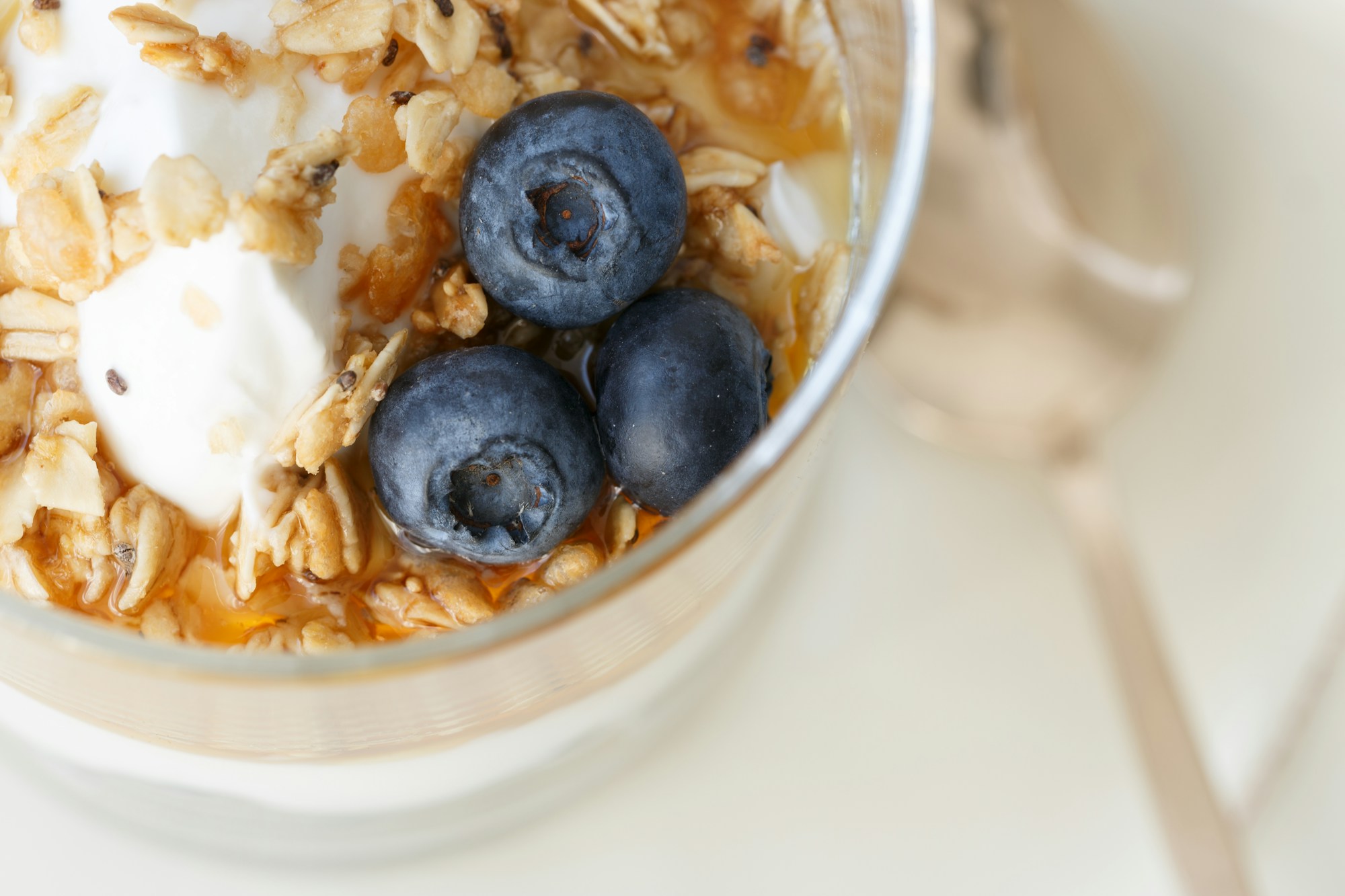
Example day: 1.7 g/kg for a 70 kg athlete
This is an example, not a prescription. Target: about 120 g protein (1.7 g/kg), in 4 to 5 doses of about 0.3 g/kg (roughly 21 g) or a little more. Check protein content against package labels or a food database.
Breakfast: eggs on toast with a glass of milk, or Greek yogurt with oats and fruit.
After the morning ride or run: a milk-based recovery drink or yogurt with fruit, plus a carbohydrate-rich meal.
Lunch: a sandwich or rice bowl with chicken, tuna, tofu or lentils.
Dinner: fish, lean meat or a legume-based dish with rice, pasta or potatoes and vegetables.
Before bed: a bowl of cottage cheese, Greek yogurt or a glass of milk.
Dairy is a convenient choice: the position paper notes that dairy proteins have performed well in the research, partly because of their leucine content [1].
If you have kidney disease or another medical condition, or a history of disordered eating, talk to your doctor or a registered dietitian before changing your protein intake.
How reload handles this
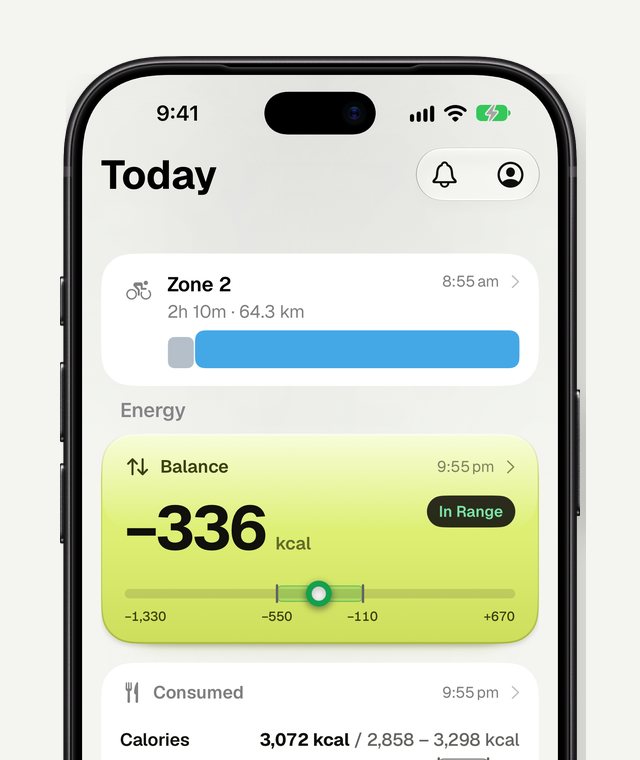
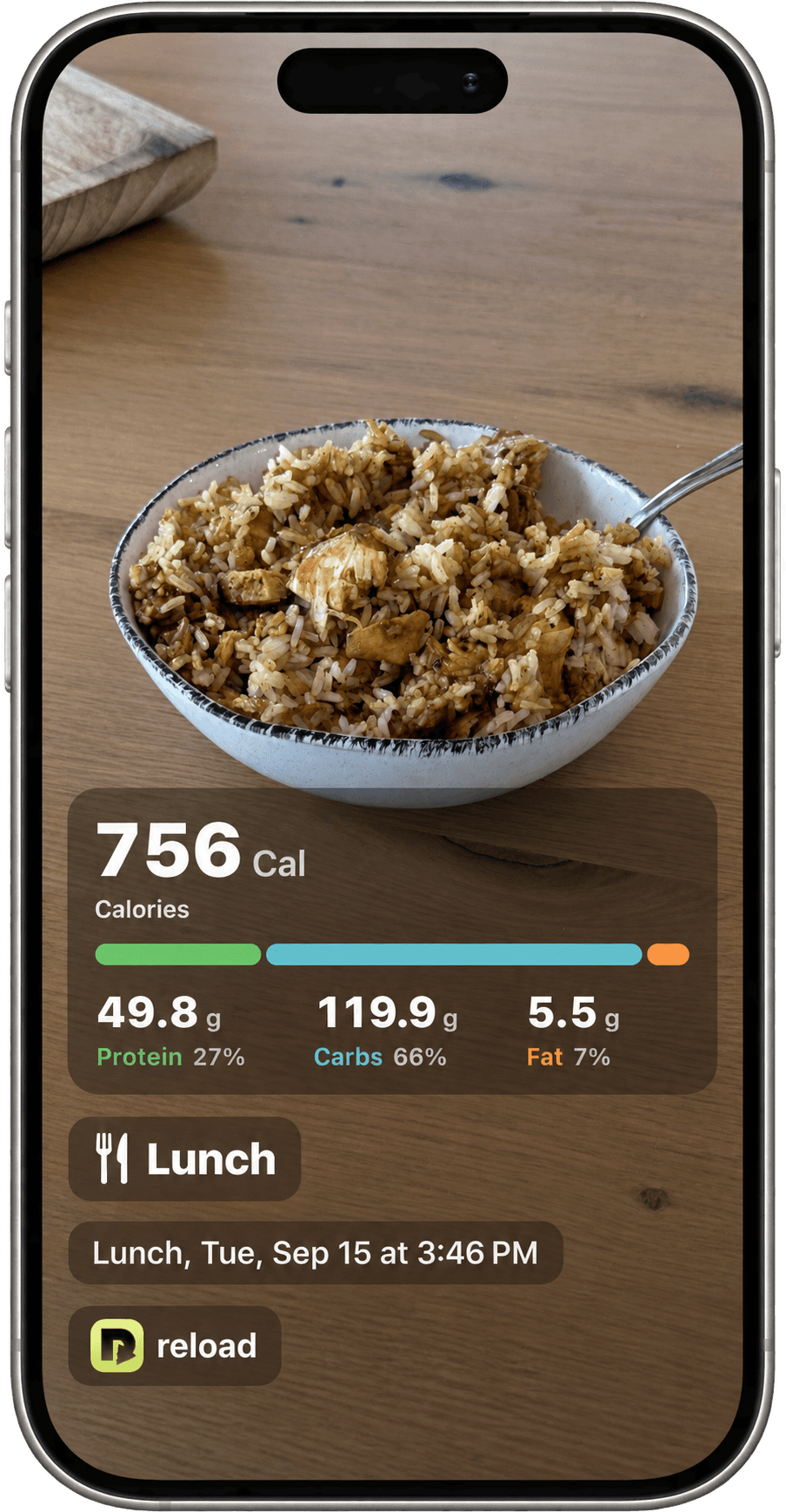
reload sets a daily protein target alongside calorie, carbohydrate and fat targets, using the training you have done and the training you have planned. Protein gets a target range, not a single number, and the app shows how the day’s targets were built, so you can see why a long ride day differs from a rest day. If you are working toward a weight goal, reload can build a deficit into each day’s targets. Food logging uses search and barcode scanning. reload Max turns a photo or a short description into calories, protein, carbs and fat, and shows every portion so you can adjust it before saving. See /pricing.




FAQ
How much protein does a cyclist need per day?
About 1.2 to 2.0 g/kg/day [1]. IAAO studies suggest about 1.6 to 1.9 g/kg/day on heavy training days [2, 3].
Is 2 g/kg of protein too much for a runner?
It is at the top of the position paper range [1] and within IAAO estimates for hard training days [5, 6]. For endurance performance, the ISSN puts adequate carbohydrate first [4], so make sure protein is not crowding out fuel.
How much protein should I eat after a long ride?
About 0.25 to 0.3 g/kg [1]. In endurance-trained young men, 30 g with carbohydrate maximized myofibrillar protein synthesis after exercise [7].
Do women need less protein than men?
Not per kg, based on current IAAO data in endurance athletes [3].
Scientific references12 sources, cited in the text as [1], [2] and so on
- 1Thomas DT, Erdman KA, Burke LM. 2016. Nutrition and Athletic Performance: joint position paper of the Academy of Nutrition and Dietetics, Dietitians of Canada, and the American College of Sports Medicine. Medicine & Science in Sports & Exercise 48(3):543-568. Full text via Dietitians of Canada: dietitians.ca/DietitiansOfCanada/media/Documents/Resources/noap-position-paper.pdf (DOI: doi.org/10.1249/MSS.0000000000000852)
- 2Kato H, Suzuki K, Bannai M, Moore DR. 2016. Protein Requirements Are Elevated in Endurance Athletes after Exercise as Determined by the Indicator Amino Acid Oxidation Method. PLoS One. doi.org/10.1371/journal.pone.0157406
- 3Williamson E, Fung HJW, Adams C, West DWD, Moore DR. 2023. Protein Requirements Are Increased in Endurance-Trained Athletes but Similar between Females and Males during Postexercise Recovery. Medicine & Science in Sports & Exercise. doi.org/10.1249/MSS.0000000000003219
- 4Jäger R, Kerksick CM, Campbell BI, et al. 2017. International Society of Sports Nutrition Position Stand: protein and exercise. Journal of the International Society of Sports Nutrition. doi.org/10.1186/s12970-017-0177-8
- 5Bandegan A, Courtney-Martin G, Rafii M, Pencharz PB, Lemon PWR. 2019. Indicator amino acid oxidation protein requirement estimate in endurance-trained men 24 h postexercise exceeds both the EAR and current athlete guidelines. American Journal of Physiology: Endocrinology and Metabolism. doi.org/10.1152/ajpendo.00174.2018
- 6Matsumoto M, Narumi-Hyakutake A, Kakutani Y, et al. 2023. Evaluation of protein requirements using the indicator amino acid oxidation method: a scoping review. The Journal of Nutrition. doi.org/10.1016/j.tjnut.2023.07.015
- 7Churchward-Venne TA, Pinckaers PJM, Smeets JSJ, et al. 2020. Dose-response effects of dietary protein on muscle protein synthesis during recovery from endurance exercise in young men: a double-blind randomized trial. The American Journal of Clinical Nutrition. doi.org/10.1093/ajcn/nqaa073
- 8Areta JL, Burke LM, Ross ML, et al. 2013. Timing and distribution of protein ingestion during prolonged recovery from resistance exercise alters myofibrillar protein synthesis. The Journal of Physiology. doi.org/10.1113/jphysiol.2012.244897
- 9Trommelen J, van Lieshout GAA, Nyakayiru J, et al. 2023. The anabolic response to protein ingestion during recovery from exercise has no upper limit in magnitude and duration in vivo in humans. Cell Reports Medicine. doi.org/10.1016/j.xcrm.2023.101324
- 10Moore DR, Churchward-Venne TA, Witard O, et al. 2015. Protein ingestion to stimulate myofibrillar protein synthesis requires greater relative protein intakes in healthy older versus younger men. The Journals of Gerontology, Series A. doi.org/10.1093/gerona/glu103
- 11Res PT, Groen B, Pennings B, et al. 2012. Protein ingestion before sleep improves postexercise overnight recovery. Medicine & Science in Sports & Exercise. doi.org/10.1249/MSS.0b013e31824cc363
- 12Witard OC, Jackman SR, Kies AK, Jeukendrup AE, Tipton KD. 2011. Effect of increased dietary protein on tolerance to intensified training. Medicine & Science in Sports & Exercise. doi.org/10.1249/MSS.0b013e3181f684c9

Live now on iPhone.
Choose your plan, check out on the web and get reload on your iPhone today. Android is coming to Google Play next, so join the Android list and you’ll be the first to know when it lands.

