Data and tech
How accurate are Garmin, WHOOP and Apple Watch calories?
How accurate are Garmin, WHOOP and Apple Watch calories? What validation studies show about wearable calorie error and how to use the numbers.

Wrist-worn devices measure heart rate well but estimate calories much less precisely. A 2026 systematic review found that even recent devices show about 10 to 40 percent error in energy expenditure against indirect calorimetry [1], and in the Stanford study of seven wrist-worn devices, none got its energy expenditure error below 20 percent [2]. Treat the calorie number on your Garmin, WHOOP or Apple Watch as an estimate with a wide error band. It is most useful for comparing your own days, not as an exact count.
How do researchers test wearable calorie accuracy?
Validation studies compare the device against a criterion method. For exercise, that is usually indirect calorimetry, which calculates energy expenditure from oxygen uptake and carbon dioxide output. Studies of total daily energy expenditure use doubly labelled water [3]. The usual error metrics are mean absolute percentage error (MAPE), bias (does the device read high or low on average) and limits of agreement (how far a single reading can miss).
These tests usually take place in a laboratory with a fixed protocol of sitting, walking, running and cycling. Free-living error may be larger because no researcher is checking the device setup [3].

What do systematic reviews conclude?
The pooled evidence is consistent across brands:
A 2020 meta-analysis (published online in 2018) of 60 studies (104 effect sizes) in the British Journal of Sports Medicine found that device accuracy varied by activity type. Heterogeneity was large, and no device consistently stayed within a 10 percent equivalence zone. Pooled estimates underestimated energy expenditure during cycling and underestimated total daily energy expenditure against doubly labelled water. Combining heart rate with accelerometry reduced error in most activity types [3].
A 2022 systematic review of 65 studies reported MAPE above 30 percent for energy expenditure for all brands and concluded that none of the tested devices measured energy expenditure accurately [4].
A 2026 systematic review of 47 studies found that energy expenditure accuracy improved the least of all metrics over time, with about 10 to 40 percent error in recent devices [1].
How accurate is Apple Watch for calories?
Apple Watch has been studied enough for a dedicated meta-analysis:
A 2025 meta-analysis of 56 studies found a mean bias for energy expenditure of 0.30 kcal per minute, with limits of agreement from -2.09 to 2.69 kcal per minute. Every subgroup’s MAPE for energy expenditure exceeded the 10 percent validity threshold, while heart rate stayed within it [5].
In the 2017 Stanford study, the Apple Watch had the lowest heart rate error of the seven devices tested, but no device met the authors’ error criterion for energy expenditure [2].
In outdoor walking and running, the Apple Watch Series 6 overestimated energy expenditure, with MAPE of 19.8 percent for walking and 24.4 percent for running [6].
Apple states that the watch uses your height, weight, gender and age to estimate calories, and that calibrating with about 20 minutes of outdoor walking or running can improve calorie accuracy in the Workout app [7].
How accurate is Garmin for calories?
Garmin says its calorie estimates are “powered by Firstbeat Analytics” [8]. Independent studies of specific models show errors similar to other brands:
The Garmin fēnix 6 overestimated energy expenditure in outdoor walking and running, with MAPE of 32.0 percent for walking and 21.8 percent for running [6].
For the Garmin fēnix 5, coefficients of variation for energy expenditure ranged from 15.9 to 34.5 percent depending on intensity. The authors concluded that none of the four watches they tested should be used to monitor energy expenditure at those intensities [9].
The Garmin Forerunner 920XT underestimated energy expenditure by 25.16 percent at the slowest aerobic running stage. During fast running (14 to 17 km/h), all three watches in that study underestimated energy expenditure by 21.62 to 49.30 percent [10].
How accurate is WHOOP for calories?
WHOOP says its daily calorie figure combines a basal metabolic rate calculated from your profile (such as height, weight and age) with an active burn from a proprietary model based on heart rate and movement data. WHOOP itself describes the outputs as estimates [11].
We searched PubMed on October 29, 2026 and did not find a peer-reviewed study that validated WHOOP’s calorie estimate against indirect calorimetry or doubly labelled water. Peer-reviewed WHOOP validation work we found covers heart rate, heart rate variability and sleep. One study found close agreement between WHOOP and ECG heart rate during slow-wave sleep [12]. That supports the heart rate input, but accurate heart rate does not mean accurate calories, as the Apple Watch data above show [2][5].
Is cycling different from running?
In the Stanford study, heart rate error was lowest on the cycle ergometer, at a median of 1.8 percent across devices. Energy expenditure error was still above 20 percent for every device [2]. The 2020 meta-analysis found a significant pooled underestimation of energy expenditure during cycling [3]. For cycling, a power meter measures the work itself and gives a more direct input. See why a power meter gives a better calorie estimate than heart rate.
Summary of key studies
What makes the error bigger or smaller?
Activity type and intensity. Error depends on the activity and, in running, grows at higher speeds [3][10].
Resistance training. Smartwatch energy expenditure agreed poorly with indirect calorimetry during resistance exercise in two 2026 studies [13][14].
The person. In the Stanford cohort, heart rate error was higher in males and in people with greater body mass index or darker skin tone [2].
Sensors. Adding heart rate to accelerometry reduced error in most activity types [3].
Why do these results go out of date?
Several limits apply to every study above:
Models and algorithms change. Studies test the hardware and software available at the time. Some devices were no longer produced by the time the meta-analysis was published, and validation lags behind product releases [2][3]. WHOOP, for example, reports changing its algorithm to better model low-intensity exercise [11].
Small, healthy samples. Several of the studies above tested 20 to 25 healthy participants [6][9][10].
Laboratory protocols. Short, steady stages in a lab do not match a five-hour ride with stops, heat and climbing [2][3].
A result for one watch generation is evidence about that generation, not a permanent rating of the brand.

How should you use wearable calorie numbers?
Keep your profile current. Apple and WHOOP both use profile data such as height, weight and age in their estimates [7][11].
Calibrate where the device allows it. Apple describes an outdoor walk or run calibration [7].
Use a power meter on the bike when you have one.
Judge by outcomes. Compare your intake and estimated burn against body mass trends, training quality and recovery over weeks, not single days. See should you eat back the calories you burn in training?
For device-specific setup, see the guides on Garmin, WHOOP and Apple Watch and Apple Health nutrition tracking.
How reload handles this
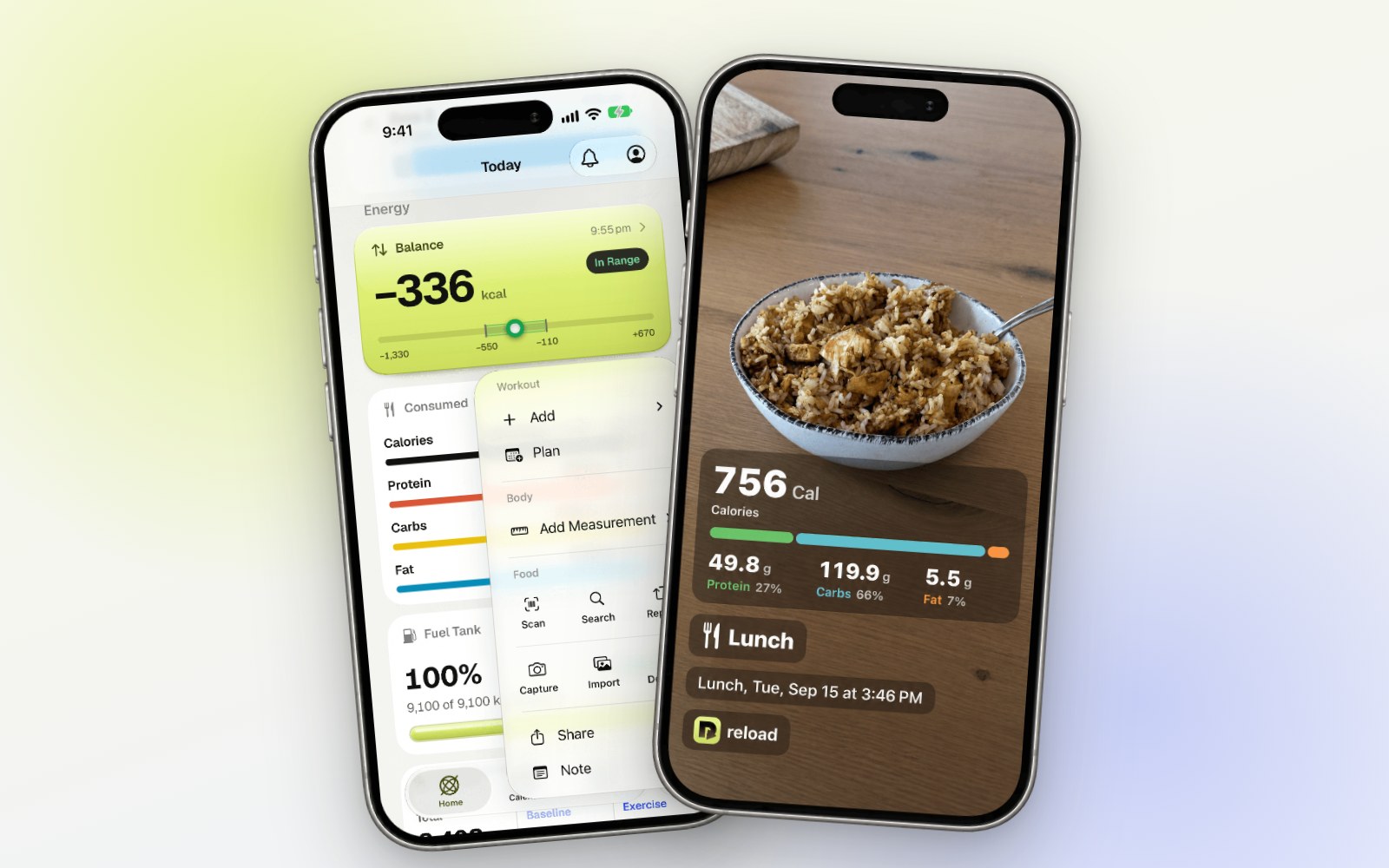
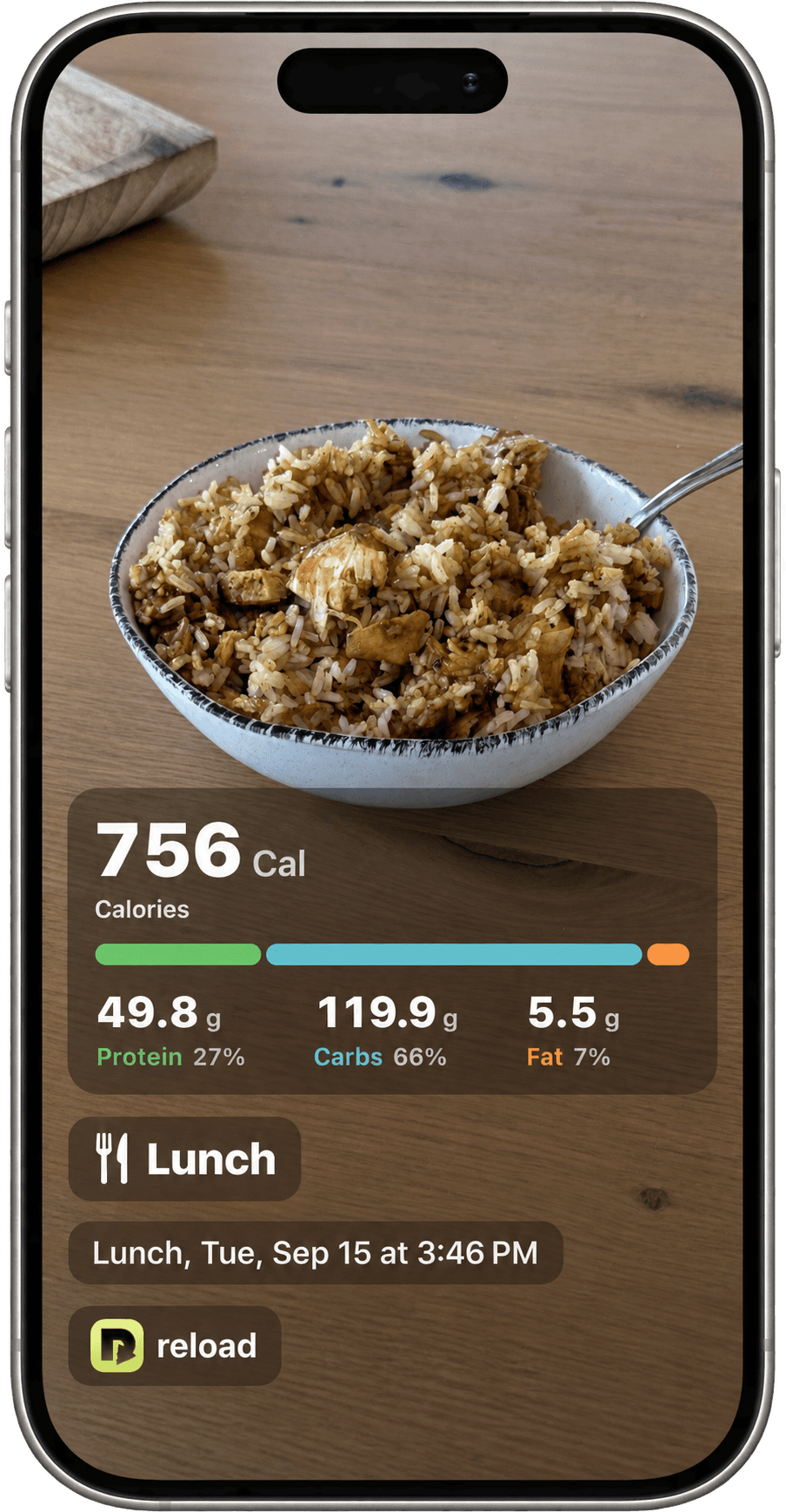
reload is a calorie and macro tracker built for endurance athletes. It connects to Garmin, Wahoo, WHOOP and Apple Health, reads the training you have done and the training you have planned, and sets daily calorie, protein, carbohydrate and fat targets. A long ride day and a rest day get different targets. Energy burned is split into resting and active, and the app shows how each day’s targets were built, so you can see what is driving the number. Protein, carbs and fat each get a target range rather than a single number. See plans and pricing.





FAQ
Which is most accurate for calories: Garmin, WHOOP or Apple Watch?
No brand has been shown to be consistently accurate for energy expenditure. Apple Watch has a dedicated meta-analysis of 56 studies, and its energy expenditure errors still exceed a common 10 percent validity threshold [5]. We did not find a peer-reviewed calorie validation for WHOOP.
Do wearables overestimate or underestimate calories?
Both, depending on the device, activity and intensity. The same watch can overestimate during easy running and underestimate during fast running [6][10].
Is the heart rate from my watch accurate?
During steady exercise, usually much more accurate than the calorie estimate. In the Stanford study, six of seven devices had a median heart rate error below 5 percent on the bike [2].
Will a chest strap make my calories accurate?
A chest strap improves the heart rate input, but the calorie figure still depends on a model of how your heart rate relates to energy use. Treat it as an estimate.
Scientific references and sources14 sources, cited in the text as [1], [2] and so on
- 1Hogue T, Khoury A, Njeim P, et al., 2026, Advancement in wrist worn physical activity trackers: technological developments and measurement accuracy: a systematic review, Frontiers in Digital Health, doi.org/10.3389/fdgth.2026.1820224
- 2Shcherbina A, Mattsson CM, Waggott D, et al., 2017, Accuracy in Wrist-Worn, Sensor-Based Measurements of Heart Rate and Energy Expenditure in a Diverse Cohort, Journal of Personalized Medicine, doi.org/10.3390/jpm7020003
- 3O'Driscoll R, Turicchi J, Beaulieu K, et al., 2020 (online 2018), How well do activity monitors estimate energy expenditure? A systematic review and meta-analysis of the validity of current technologies, British Journal of Sports Medicine, doi.org/10.1136/bjsports-2018-099643
- 4Germini F, Noronha N, Borg Debono V, et al., 2022, Accuracy and Acceptability of Wrist-Wearable Activity-Tracking Devices: Systematic Review of the Literature, Journal of Medical Internet Research, doi.org/10.2196/30791
- 5Choe JP, Kang M, 2025, Apple watch accuracy in monitoring health metrics: a systematic review and meta-analysis, Physiological Measurement, doi.org/10.1088/1361-6579/adca82
- 6Le S, Wang X, Zhang T, et al., 2022, Validity of three smartwatches in estimating energy expenditure during outdoor walking and running, Frontiers in Physiology, doi.org/10.3389/fphys.2022.995575
- 7Apple, 2026, Calibrate your Apple Watch for improved Workout and Activity accuracy, Apple Support (checked October 29, 2026), support.apple.com/en-us/HT204516
- 8Garmin, Calories Burned, Garmin Technologies (checked October 29, 2026), garmin.ae/garmin-technologies/calories-burned
- 9Düking P, Giessing L, Frenkel MO, et al., 2020, Wrist-Worn Wearables for Monitoring Heart Rate and Energy Expenditure While Sitting or Performing Light-to-Vigorous Physical Activity: Validation Study, JMIR mHealth and uHealth, doi.org/10.2196/16716
- 10Roos L, Taube W, Beeler N, Wyss T, 2017, Validity of sports watches when estimating energy expenditure during running, BMC Sports Science, Medicine and Rehabilitation, doi.org/10.1186/s13102-017-0089-6
- 11Capodilupo E, Calorie Tracking Explained: BMR, Burn, and Accuracy, WHOOP The Locker (checked October 29, 2026), whoop.com/thelocker/calorie-tracking-science/
- 12Bellenger CR, Miller DJ, Halson SL, et al., 2021, Wrist-Based Photoplethysmography Assessment of Heart Rate and Heart Rate Variability: Validation of WHOOP, Sensors, doi.org/10.3390/s21103571
- 13Lee TH, Jun DU, Bae JY, et al., 2026, Comparative Validity of Smartwatch-Derived Heart Rate and Energy Expenditure During Endurance and Resistance Exercise, Sensors, doi.org/10.3390/s26082526
- 14Yun JH, Ko JM, Lee TH, 2026, Criterion Validity of Smartwatches for Measuring Heart Rate and Energy Expenditure During Resistance Exercise, Bioengineering, doi.org/10.3390/bioengineering13101099

Live now on iPhone.
Choose your plan, check out on the web and get reload on your iPhone today. Android is coming to Google Play next, so join the Android list and you’ll be the first to know when it lands.

