Fueling
How many carbs per hour on the bike? Ranges by ride length
How many carbs per hour cycling? Evidence-based ranges by ride length, from 30 to 60 g/h up to 90 g/h, and what the research says about 120 g/h.

Rides of about an hour or less do not require much carbohydrate, although a small amount or a carbohydrate mouth rinse can help a hard effort [2]. For rides of 1 to 2.5 hours, the 2016 sports nutrition position stand recommends 30 to 60 g of carbohydrate per hour, and for rides longer than about 2.5 to 3 hours, up to 90 g/h from a glucose and fructose mix [1, 3]. Newer studies show that trained cyclists can absorb and oxidize more at 90 to 120 g/h, but whether that improves performance has not yet been established [1].
How many carbs per hour do you need on the bike?
The graphic combines the 2016 ACSM, Academy of Nutrition and Dietetics and Dietitians of Canada position stand [3], Jeukendrup’s duration-based guidelines [2] and a 2026 review [1]. The bands overlap because the sources differ, so match both duration and intensity.
These figures come mostly from trained athletes. Riders working at lower absolute intensities oxidize less carbohydrate, so adjust downward for easier riding [2]. The guidelines use grams per hour, not per kilogram, because absorption rather than body size was considered the main limit [2], a point now being revisited (see below).
Why was 60 g per hour the old ceiling?
Glucose is absorbed through the SGLT1 transporter, which appears to become saturated at an intake of around 60 g/h [2]. Early isotope studies found that exogenous (ingested) carbohydrate oxidation plateaued at about 1.0 to 1.1 g/min, regardless of how much more was ingested [4].
Fructose uses a different transporter. When cyclists drank 1.2 g/min of glucose plus 0.6 g/min of fructose, peak exogenous oxidation reached about 1.26 g/min, compared with 0.80 to 0.83 g/min with glucose alone [5]. A glucose, fructose and sucrose mix ingested at 2.4 g/min (144 g/h) reached about 1.70 g/min [6]. That is the basis for the 90 g/h recommendation: above about 60 g/h, a single sugar is limited by absorption, and a mix raises how much ingested carbohydrate is oxidized.

Is 90 or 120 g of carbs per hour better?
Oxidation clearly goes up at 120 g/h. Performance data are still thin.
What is established:
In 11 highly trained male cyclists riding 3 hours, 120 g/h (fructose to maltodextrin ratio 0.8:1) produced higher exogenous oxidation in the final hour than 90 g/h at a 1:2 ratio, at 1.51 vs 1.29 g/min [7].
In 9 trained males riding 3 hours, 120 g/h from drinks, gels, chews or a mix produced similar peak exogenous oxidation (1.56 to 1.66 g/min) with minimal reported gut distress [8].
Not all ingested carbohydrate is oxidized. Oxidation efficiency in that study was about 72 to 75% [8], which is why a 2026 review suggests that oxidizing about 90 g/h likely requires ingesting 90 to 120 g/h [1].
What is still debated:
In the 120 vs 90 g/h study, endogenous carbohydrate oxidation did not differ (2.15 vs 2.20 g/min), so the extra intake did not spare more of the body’s own glycogen [7].
A multi-site dose and performance study in 51 cyclists and triathletes found a curvilinear relationship, with the best 20 km time trial after 2 hours of riding at about 78 g/h and diminishing gains above that [9].
A 2026 review concluded that the upper limit could rise from 90 to 120 g/h for trained athletes, but that a definitive dose and performance study has not been completed and that intakes of 120 to 200 g/h seen in the field are not yet supported by research [1].
Most of this evidence comes from male participants. Fewer than 3% of studies in this area used female-only cohorts [1].
Several of these studies and reviews list author affiliations with, or disclose relationships to, sports nutrition companies [1, 2, 8, 9]. That does not make the data wrong, but it is worth knowing.
How many carbs per hour for a 3-hour ride?
These are illustrative starting points built from the ranges above, not prescriptions.
3-hour steady endurance ride. At moderate intensity, about 60 g/h is a sensible start, since it sits within the 2 to 3 hour guideline and single-source carbohydrate can cover it [2]. At very easy intensity, less may be enough [2].
3-hour ride with hard efforts or a race. The duration is at the threshold where up to 90 g/h from glucose plus fructose applies [1, 3]. Riders who have practiced higher intakes may work toward 90 to 120 g/h, with the caveat that the performance benefit above 90 g/h is unproven [1].
What glucose to fructose ratio should you use?
At 60 g/h or less, glucose or maltodextrin alone is typically recommended [1]. At higher intakes, the three studies that compared ratios directly found that raising the fructose to glucose ratio from about 0.4 to 0.5 up to about 0.6 to 1.0 increased exogenous oxidation at total intakes of about 70 to 110 g/h [1]. A ratio of 0.6 to 1.0 currently appears optimal, but the evidence base is small and individual responses likely vary [1].
Gels, drinks, chews or bars?
Drinks, gels and jelly chews produced comparable exogenous oxidation at 120 g/h [8]. Solid bars have been linked to lower oxidation late in exercise and more gut symptoms when used alone, likely because protein, fat and fiber slow gastric emptying [1]. Mixing formats lets you hit the target with less risk [1, 2]. Concentrated carbohydrate and solid food can also reduce fluid absorption, so plan fluids alongside carbohydrate [2].

Can you train your gut to tolerate more carbs?
Probably, for comfort. Less clearly, for oxidation.
A 2023 systematic review found 8 gut-training studies. Two studies of a 2-week repetitive carbohydrate feeding protocol reported an average 47% reduction in gut discomfort, and two reported a 45 to 54% reduction in carbohydrate malabsorption, while a third found no significant change [10]. Gastric emptying and markers of intestinal injury did not change [10].
In a 28-day study, cyclists who took carbohydrate during daily training increased exogenous glucose oxidation during a 100-minute ride from 54.6 to 63.6 g, but their performance gains were no different from a group training without that carbohydrate [11]. A 2026 review found no evidence yet that gut-training protocols themselves increase exogenous oxidation [1]. The practical takeaway is to rehearse race-day intake in training [1, 2].
What changes the number: heat, altitude, body size and sex
Heat. Exogenous carbohydrate oxidation is reduced by about 20 to 30% in the heat, but a 2026 review still recommends similar intakes, with a modest reduction if gut symptoms appear [1].
Altitude. Above about 4,000 m, exogenous oxidation can fall by about 20 to 50%, but most race exposure is lower and shorter, and there is no evidence that recommendations should change [1].
Body size. In one tracer study at 90 g/h of glucose, cyclists over 70 kg oxidized about 45 g/h of the ingested glucose compared with about 33 g/h in those under 70 kg [1]. This challenges the older view that body size does not matter [2].
Sex. The few direct comparisons are small and inconsistent, and the question remains open [1].
For the day-level picture, see what to eat before a long ride, how glycogen stores work and how many calories a ride burns.
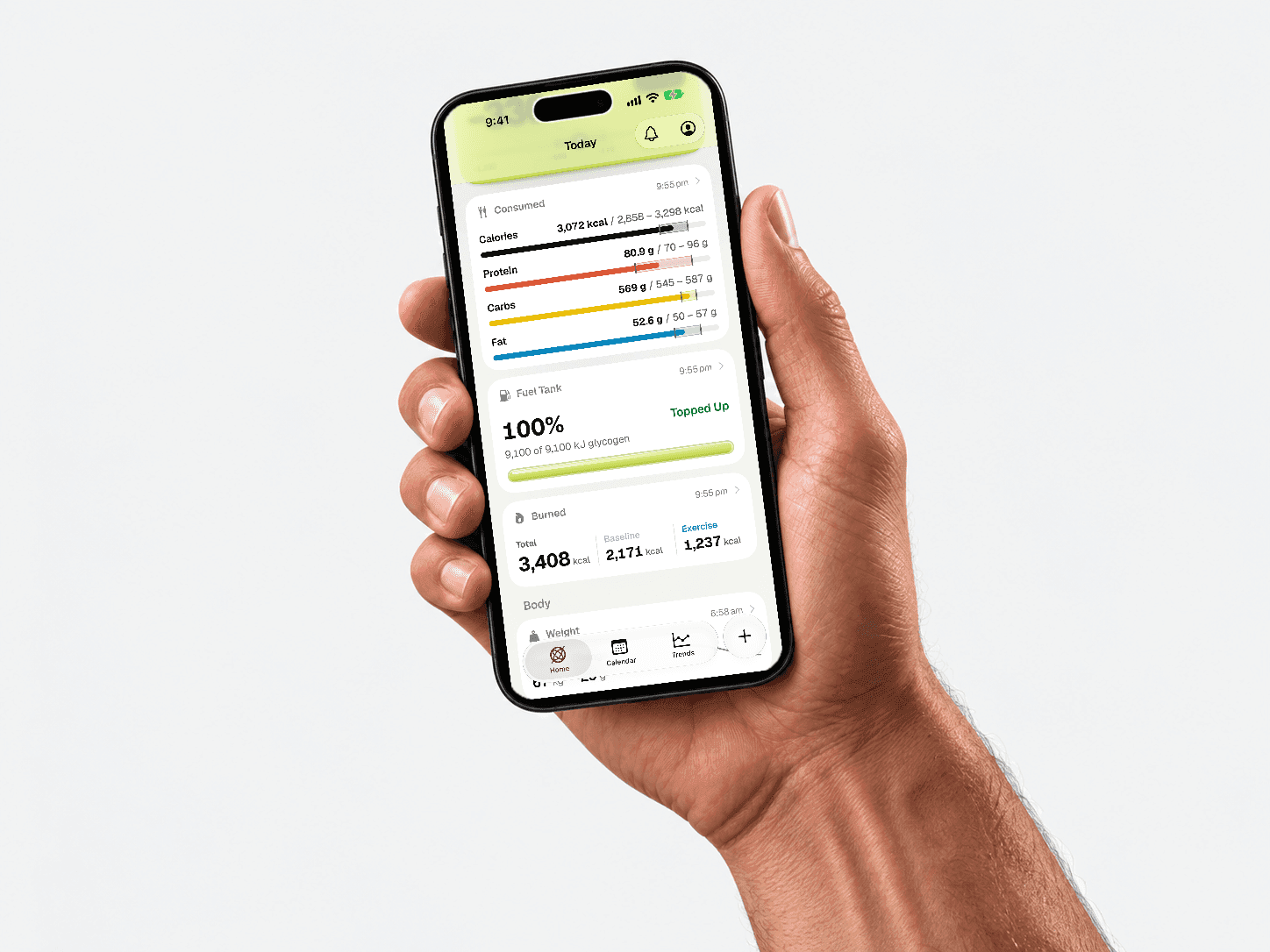
How reload handles this
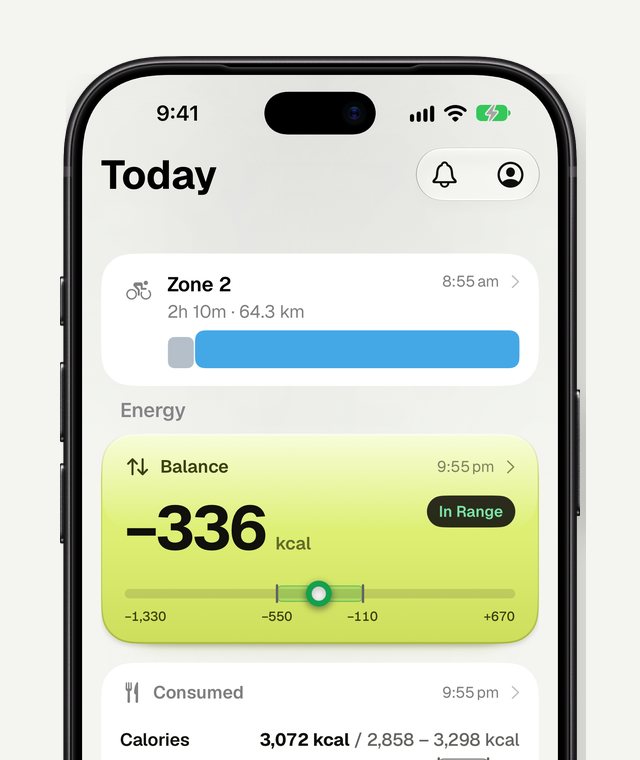
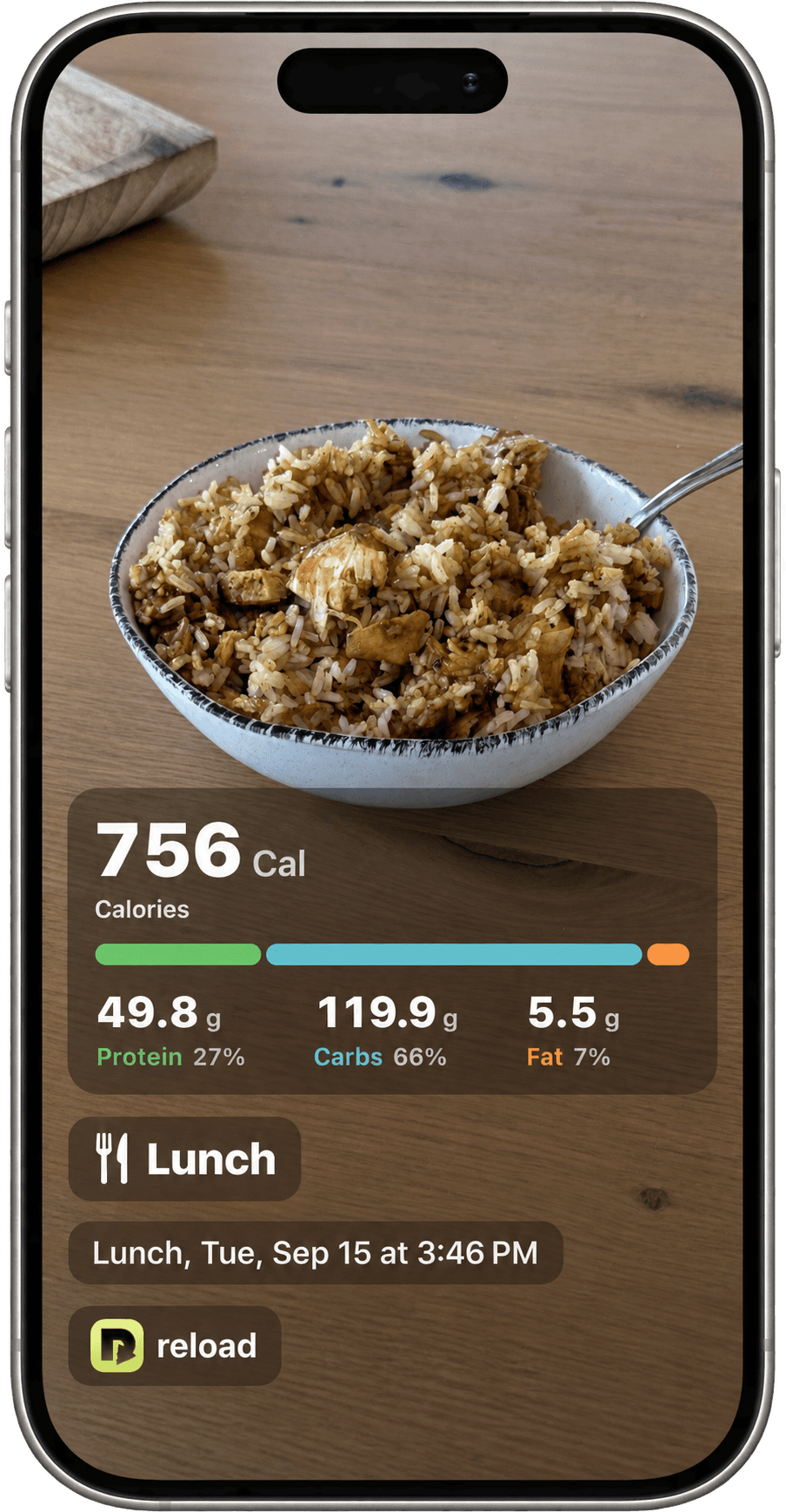
reload is a calorie and macro tracker built for endurance athletes. It reads the training you have done and the training you have planned, and sets daily calorie, protein, carbohydrate and fat targets, so a long ride day and a rest day get different targets. Each macro gets a target range rather than a single number, and the app shows how the day’s targets were built. The fuel tank gives an estimate of stored glycogen from training load and food intake, shown as Topped up, Adequate, Underfueled or On reserve. It is a model estimate, not a measurement. reload connects with Garmin, Wahoo, WHOOP and Apple Health and is available on iPhone. See plans and pricing.




FAQ
Do I need carbs on a 1-hour ride?
Not for fuel in most cases. For a hard effort of about 30 to 60 minutes, a carbohydrate mouth rinse or a small amount may improve performance [2].
Is 90 g of carbs per hour too much?
For rides longer than about 2.5 to 3 hours, up to 90 g/h from glucose plus fructose is within the established guidelines [1, 3]. Build up to it in training, because gut tolerance varies [1, 10].
Should I eat 120 g of carbs per hour?
Trained cyclists can oxidize more carbohydrate at 120 g/h than at 90 g/h [7], but a performance benefit has not yet been demonstrated [1]. Treat it as an option to test in training, not a default.
Should carbs per hour scale with body weight?
Current guidelines use grams per hour, not per kilogram [2]. Newer data suggest larger riders may oxidize more ingested glucose, so this may be refined [1].
Scientific references11 sources, cited in the text as [1], [2] and so on
- 1Morton JP, Fell JM, Gonzalez JT, Hearris MA, Podlogar T, Pugh JN, Wallis GA. 2026. From Metabolism to Medals: Contemporary Perspectives and Revisiting Carbohydrate Guidelines for Fueling Endurance Athletes during Exercise. The Journal of Nutrition. doi.org/10.1016/j.tjnut.2026.101442
- 2Jeukendrup A. 2014. A step towards personalized sports nutrition: carbohydrate intake during exercise. Sports Medicine. doi.org/10.1007/s40279-014-0148-z
- 3Thomas DT, Erdman KA, Burke LM. 2016. American College of Sports Medicine Joint Position Statement. Nutrition and Athletic Performance. Medicine and Science in Sports and Exercise. doi.org/10.1249/MSS.0000000000000852
- 4Jeukendrup AE, Jentjens R. 2000. Oxidation of carbohydrate feedings during prolonged exercise: current thoughts, guidelines and directions for future research. Sports Medicine. doi.org/10.2165/00007256-200029060-00004
- 5Jentjens RL, Moseley L, Waring RH, Harding LK, Jeukendrup AE. 2004. Oxidation of combined ingestion of glucose and fructose during exercise. Journal of Applied Physiology. doi.org/10.1152/japplphysiol.00974.2003
- 6Jentjens RL, Achten J, Jeukendrup AE. 2004. High oxidation rates from combined carbohydrates ingested during exercise. Medicine and Science in Sports and Exercise. doi.org/10.1249/01.mss.0000139796.07843.1d
- 7Podlogar T, Bokal Š, Cirnski S, Wallis GA. 2022. Increased exogenous but unaltered endogenous carbohydrate oxidation with combined fructose-maltodextrin ingested at 120 g/h versus 90 g/h at different ratios. European Journal of Applied Physiology. doi.org/10.1007/s00421-022-05019-w
- 8Hearris MA, Pugh JN, Langan-Evans C, Mann SJ, Burke L, Stellingwerff T, Gonzalez JT, Morton JP. 2022. 13C-glucose-fructose labeling reveals comparable exogenous CHO oxidation during exercise when consuming 120 g/h in fluid, gel, jelly chew, or coingestion. Journal of Applied Physiology. doi.org/10.1152/japplphysiol.00091.2022
- 9Smith JW, Pascoe DD, Passe DH, Ruby BC, Stewart LK, Baker LB, Zachwieja JJ. 2013. Curvilinear dose-response relationship of carbohydrate (0-120 g/h) and performance. Medicine and Science in Sports and Exercise. doi.org/10.1249/MSS.0b013e31827205d1
- 10Martinez IG, Mika AS, Biesiekierski JR, Costa RJS. 2023. The Effect of Gut-Training and Feeding-Challenge on Markers of Gastrointestinal Status in Response to Endurance Exercise: A Systematic Literature Review. Sports Medicine. doi.org/10.1007/s40279-023-01841-0
- 11Cox GR, Clark SA, Cox AJ, Halson SL, Hargreaves M, Hawley JA, Jeacocke N, Snow RJ, Yeo WK, Burke LM. 2010. Daily training with high carbohydrate availability increases exogenous carbohydrate oxidation during endurance cycling. Journal of Applied Physiology. doi.org/10.1152/japplphysiol.00950.2009

Live now on iPhone.
Choose your plan, check out on the web and get reload on your iPhone today. Android is coming to Google Play next, so join the Android list and you’ll be the first to know when it lands.

