Buying guides
Best calorie tracker for endurance athletes in 2026
How to choose the best calorie tracker for endurance athletes: training-aware targets, integrations, carb guidance, logging speed and price model.

The best calorie tracker for an endurance athlete is one that changes your targets with your training, because the published carbohydrate ranges for a 1 hour training day (5 to 7 g/kg) and a 4 to 5 hour day (8 to 12 g/kg) do not even overlap [1]. Look for training-aware daily targets, integrations with the devices you already use, carbohydrate guidance in grams, fast logging, and a price model you will keep paying for.
What should an endurance athlete look for in a calorie tracker?
Five criteria separate an app that suits endurance training from one built for a steady daily routine: training-aware targets, integrations, carbohydrate guidance, logging speed and price model.
Does it set different targets for a long ride day and a rest day?
This is the criterion that matters most. The joint position stand from the Academy of Nutrition and Dietetics, Dietitians of Canada and the American College of Sports Medicine [2], as summarized by Vitale and Getzin [1], gives these daily carbohydrate ranges:
The gram figures for a 70 kg athlete are simple arithmetic on the published ranges, not a prescription. They show why a single fixed daily number fits poorly when your week includes both short recovery spins and long weekend sessions. For more on the day-to-day swing, see rest day vs training day nutrition.
Protein guidance is steadier. The same position stand recommends about 1.2 to 2.0 g/kg per day for athletes [1], and the International Society of Sports Nutrition gives 1.4 to 2.0 g/kg per day for most exercising individuals [5]. Our protein guide covers timing and dose.
There is a second reason to care. The 2023 IOC consensus on Relative Energy Deficiency in Sport (REDs) describes low energy availability as inadequate energy intake in relation to exercise energy expenditure, and notes a growing role for low carbohydrate availability in REDs research [7]. A tracker that leaves your intake flat while training rises makes that mismatch easier to miss. See signs you are under-fueling.
Does it connect to your training data?
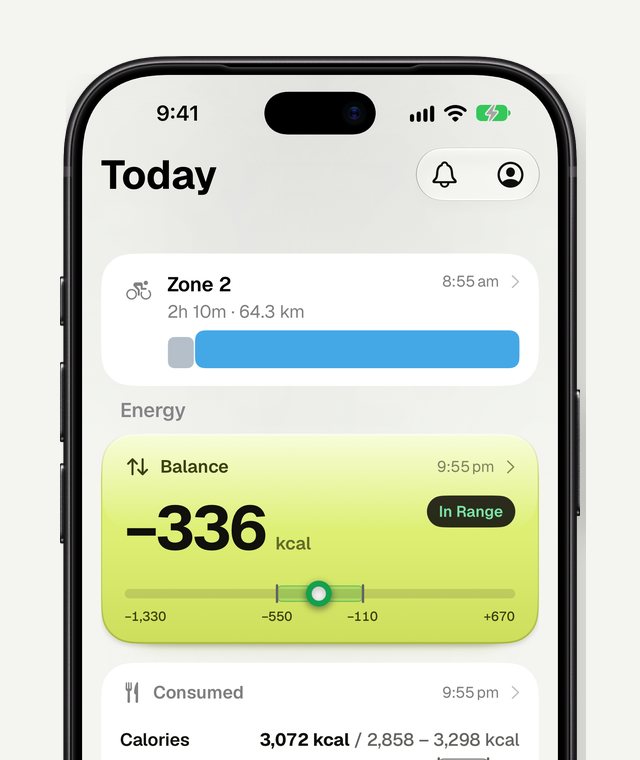
Check which devices and platforms connect, and whether the app reads planned sessions as well as completed ones. Planned training lets an app raise targets before a big day rather than after it.
Keep in mind that burned calories from any wearable are estimates. In a Stanford study of seven wrist-worn devices, none estimated energy expenditure with an error below 20 percent, although heart rate during cycling was measured well by most of them [6]. Devices have changed since 2017, but the lesson holds: treat energy burned as an estimate. We compare devices in how accurate Garmin, WHOOP and Apple Watch calorie numbers are.
Does it give carbohydrate guidance, not just calories?
Daily targets should show carbohydrate in grams, and ideally as a range. For fueling during sessions, research suggests about 30 to 60 g per hour for longer efforts, with intakes up to about 90 g per hour possibly benefiting events longer than 2.5 hours [3]. Jeukendrup notes that intakes near 90 g per hour need multiple transportable carbohydrates to be absorbed and oxidized at that rate [4]. Details are in how many carbs per hour on the bike.
How fast is logging?
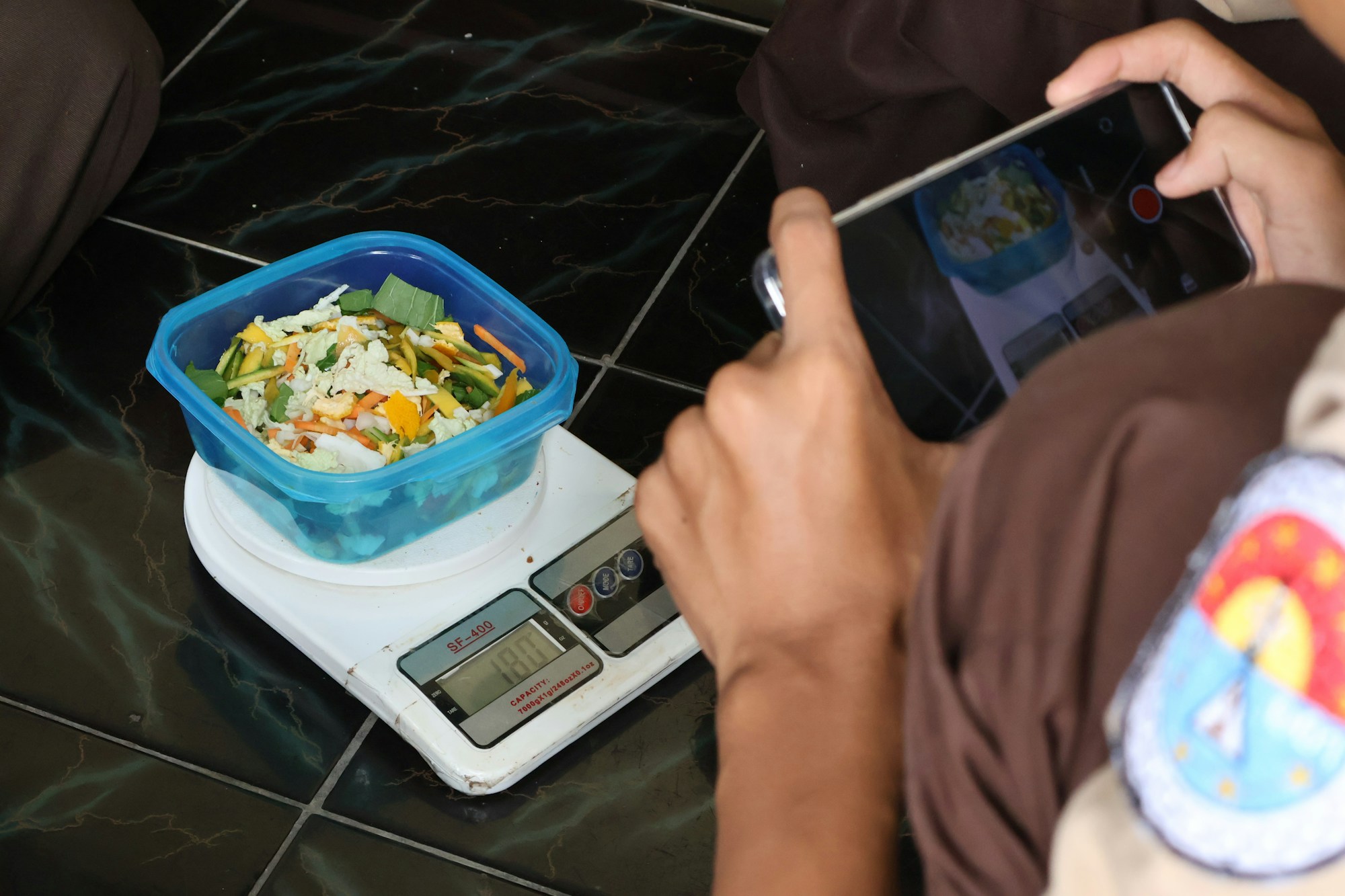
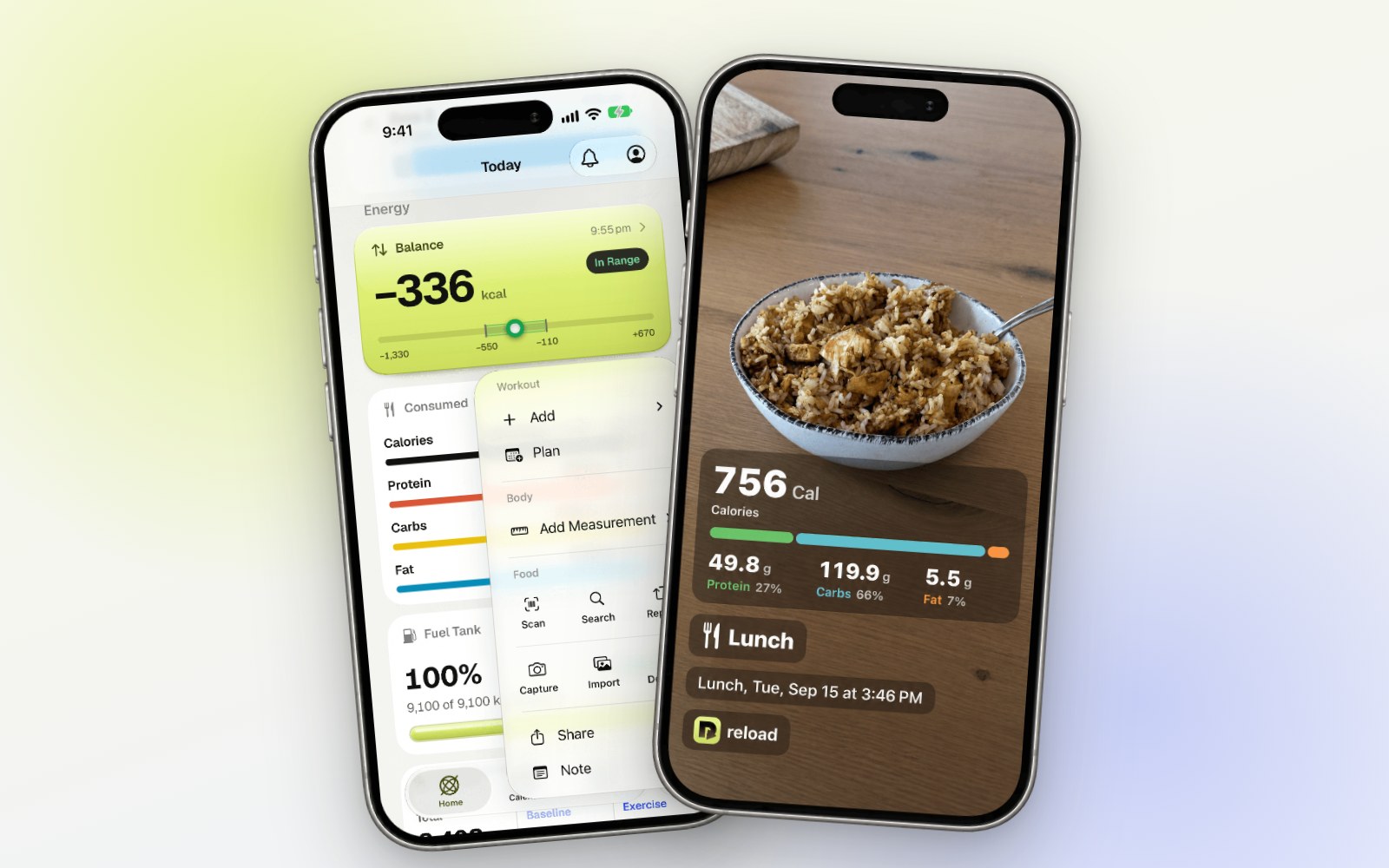
Speed comes from barcode scanning, repeat meals and, increasingly, logging from a photo or a short text description. AI logging produces portion estimates, so check whether you can review and edit each item before it saves.
What does the price model look like?
Most apps in this category use one of three models: a free tier with a paid upgrade, a subscription with a free trial, or a subscription only. Check which tier includes the features above. In some apps, barcode scanning or custom macro goals sit in the paid tier [8].
How do the main calorie trackers for endurance athletes compare?
The graphic below uses only what each company states on its own website or App Store listing, checked on 29 Oct 2026. “Not stated” means we could not find the feature described there, not that it does not exist.
Which type of app fits which athlete?
General trackers such as MyFitnessPal and Cronometer suit athletes who want a very large food database or detailed micronutrient data. MyFitnessPal’s App Store listing cites more than 20.5 million foods [9], and Cronometer tracks up to 95 nutrients and compounds according to its website [10].
Adaptive coaching apps such as MacroFactor adjust your macro plan in weekly check-ins as their expenditure estimate updates [12]. That structure suits athletes who think about nutrition week by week.
Training-aware fueling apps such as Hexis, Fuelin and MAVR build daily or per-meal targets from your training data and include food logging [13][16][18]. reload is also in this group.
Session planners such as Saturday focus on what to eat and drink during a given workout or race [21]. Athletes who also want a daily food log typically pair a session planner with a separate tracker.
How reload handles this
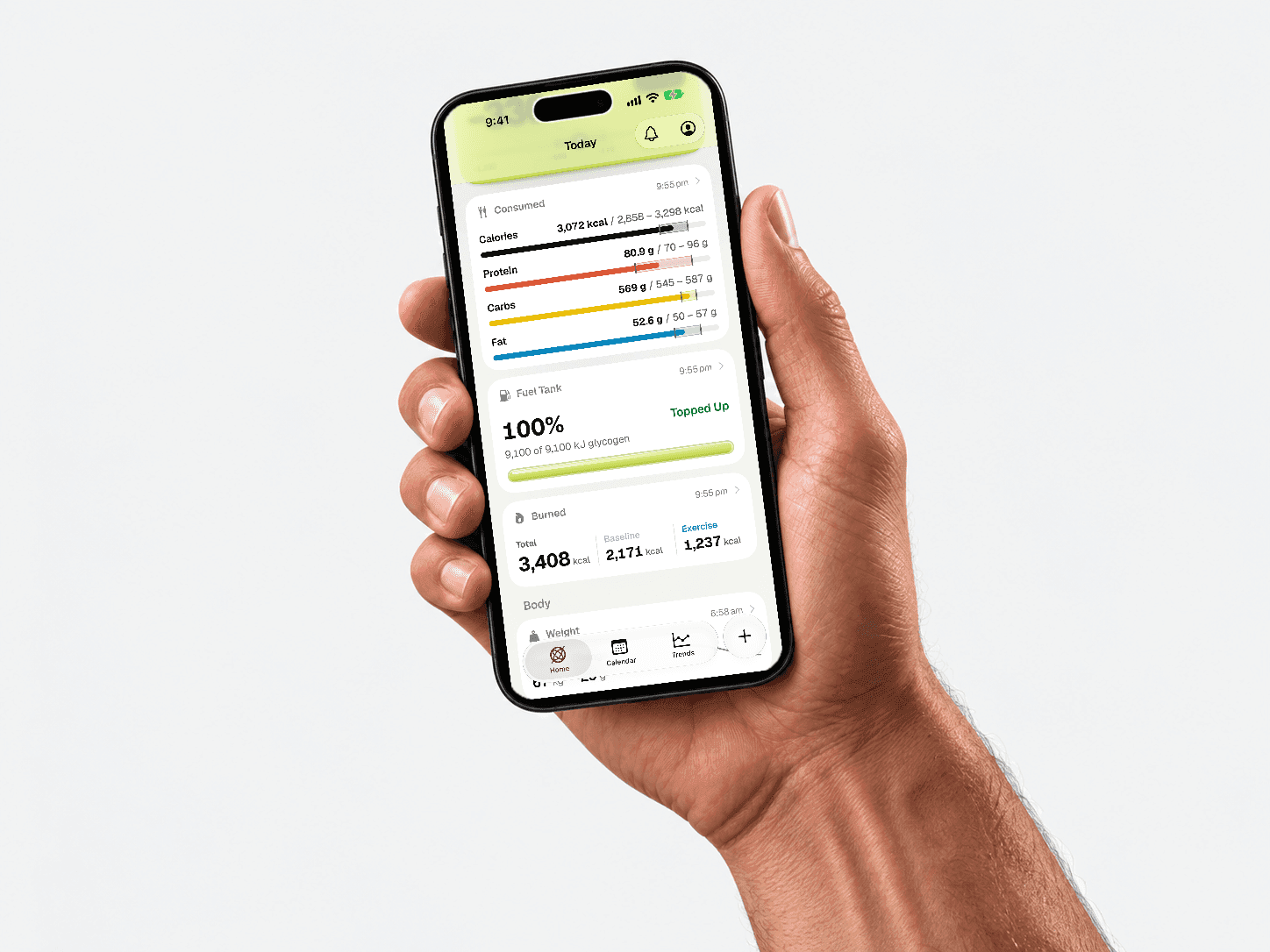
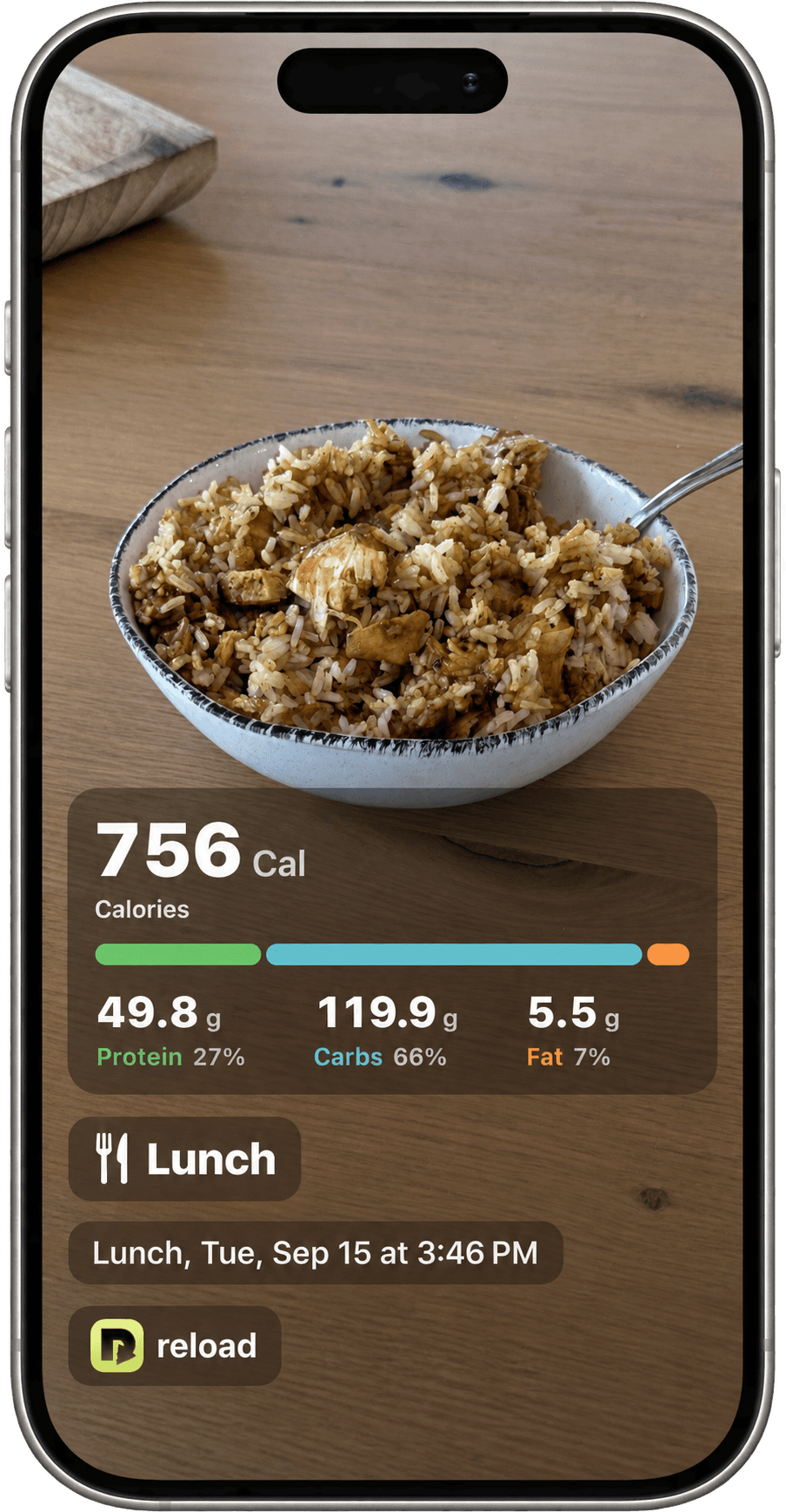
reload is a calorie and macro tracker built for endurance athletes. It reads the training you have done and the training you have planned, then sets daily calorie, protein, carbohydrate and fat targets, so a long ride day and a rest day get different numbers. Protein, carbs and fat each get a target range, and the app shows how the day’s targets were built. Energy burned is split into resting and active. The fuel tank gives an estimate of stored glycogen from training load and food intake, shown as Topped up, Adequate, Underfueled or On reserve. It is a model estimate, not a measurement. reload connects to Garmin, Wahoo, WHOOP and Apple Health, and supports search and barcode logging. reload Max turns a photo or a short description into calories, protein, carbs and fat, and shows every portion so you can adjust it before saving. See plans and pricing.




FAQ
Is a calorie tracker accurate enough for endurance training?
Food logs and burned-calorie figures are both estimates. Wrist-worn devices in one lab study all had energy expenditure errors of 20 percent or more [6], so use trends and ranges rather than single numbers.
Do I need a separate fueling app for races?
Not always. If your tracker gives carbohydrate targets in grams and you plan session fueling yourself, one app can be enough. A per-session planner such as Saturday can sit alongside a daily tracker if you want hour-by-hour plans [21].
How many carbs should I eat on a long training day?
Published guidance for 4 to 5 hours a day of moderate to high intensity training is about 8 to 12 g/kg of body mass per day [1]. Individual needs vary with intensity, body size and goals.
Can I use a calorie tracker to lose weight during a training block?
Some apps, reload included, can build a deficit into daily targets. Read how to lose weight during a training block first, and talk to a doctor or registered dietitian if you have a medical condition or a history of disordered eating.
Scientific references and sources21 sources, cited in the text as [1], [2] and so on
- 1Vitale K, Getzin A. 2019. Nutrition and Supplement Update for the Endurance Athlete: Review and Recommendations. Nutrients. doi.org/10.3390/nu11061289
- 2Thomas DT, Erdman KA, Burke LM. 2016. American College of Sports Medicine Joint Position Statement. Nutrition and Athletic Performance. Medicine and Science in Sports and Exercise. doi.org/10.1249/MSS.0000000000000852
- 3Burke LM, Hawley JA, Wong SH, Jeukendrup AE. 2011. Carbohydrates for training and competition. Journal of Sports Sciences. doi.org/10.1080/02640414.2011.585473
- 4Jeukendrup A. 2014. A step towards personalized sports nutrition: carbohydrate intake during exercise. Sports Medicine. doi.org/10.1007/s40279-014-0148-z
- 5Jäger R, Kerksick CM, Campbell BI, et al. 2017. International Society of Sports Nutrition Position Stand: protein and exercise. Journal of the International Society of Sports Nutrition. doi.org/10.1186/s12970-017-0177-8
- 6Shcherbina A, Mattsson CM, Waggott D, et al. 2017. Accuracy in Wrist-Worn, Sensor-Based Measurements of Heart Rate and Energy Expenditure in a Diverse Cohort. Journal of Personalized Medicine. doi.org/10.3390/jpm7020003
- 7Mountjoy M, Ackerman KE, Bailey DM, et al. 2023. 2023 International Olympic Committee's (IOC) consensus statement on Relative Energy Deficiency in Sport (REDs). British Journal of Sports Medicine. doi.org/10.1136/bjsports-2023-106994
- 8MyFitnessPal, Inc. 2026. MyFitnessPal Premium. myfitnesspal.com. myfitnesspal.com/premium (checked 29 Oct 2026)
- 9MyFitnessPal, Inc. 2026. MyFitnessPal: Calorie Counter. Apple App Store (US). apps.apple.com/us/app/myfitnesspal-calorie-counter/id341232718 (checked 29 Oct 2026)
- 10Cronometer Software Inc. 2026. Cronometer homepage. cronometer.com. cronometer.com/ (checked 29 Oct 2026)
- 11Cronometer Software Inc. 2026. Cronometer: Calorie Counter. Apple App Store (US). apps.apple.com/us/app/cronometer-calorie-counter/id1145935738 (checked 29 Oct 2026)
- 12Stronger By Science Technologies LLC. 2026. MacroFactor: Macro Tracker. Apple App Store (US). apps.apple.com/us/app/macrofactor-macro-tracker/id1553503471 (checked 29 Oct 2026)
- 13Hexis. 2026. Hexis homepage. hexis.live. hexis.live/ (checked 29 Oct 2026)
- 14Applied Behaviour Systems Ltd. 2026. Hexis. Apple App Store (UK). apps.apple.com/gb/app/hexis/id1610334327 (checked 29 Oct 2026)
- 15MyFitnessPal. 2026. Calorie Adjustments. MyFitnessPal Developer documentation. myfitnesspalapi.com/docs/appendix-tracking-calorie-adjustments (checked 29 Oct 2026)
- 16Fuelin. 2026. Fuelin homepage and FAQ. fuelin.com. fuelin.com/ (checked 29 Oct 2026)
- 17Fuelin. 2026. Fuelin pricing. fuelin.com. fuelin.com/pricing (checked 29 Oct 2026)
- 18Mavr. 2026. Mavr homepage and FAQ. mavr.app. mavr.app/ (checked 29 Oct 2026)
- 19Bradley Vangelder. 2026. Mavr: Running Nutrition and Fuel. Apple App Store. apps.apple.com/app/id6740541806 (checked 29 Oct 2026)
- 20Saturday. 2026. Saturday homepage and integrations. saturday.fit. saturday.fit/ and saturday.fit/integrations (checked 29 Oct 2026)
- 21Saturday Inc. 2026. Saturday: Pro Fuel and Hydration. Apple App Store (US). apps.apple.com/us/app/-/id6444738746 (checked 29 Oct 2026)

Live now on iPhone.
Choose your plan, check out on the web and get reload on your iPhone today. Android is coming to Google Play next, so join the Android list and you’ll be the first to know when it lands.

